
A Farm Planning Update
1 Comment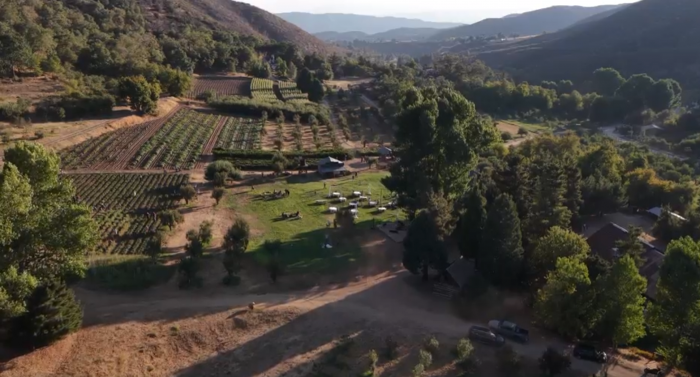
A Farm Planning Update…
We’re trying to be as transparent as possible about both the challenges and the opportunities presented by this 800 acre stretch of Oak Glen rural beauty. We enjoy reading your ideas, and – most importantly – we appreciate that many of you have specific talents, (financial, engineering, marketing, legal, horticultural), which we hope to put to good use. We seek to create something of a “Bay Colony Joint Stock Company” of earnest “adventurers” to oversee the creation of a cultural center that celebrates America’s Christian history in a way that will instruct future generations.
That very transparency of ours means some of the progressives who hate us will accuse any investment plan we propose as representing “socialism,” and “begging.” (One woman wrote a few days ago, “you deserve to lose everything!”) Fortunately, there are far more rational, educated, loving people in our audience, (some of whom actually took an Econ class). One fellow who invested $10,000 in our first crowd-lend told us how much the farm had meant to his family over the years, and he was like MANY others. We raised so much cash so quickly, the facilitator, Honeycomb credit, was amazed by our progress.
Soar or Sail
I described our general strategy in the farm journal a few weeks ago. Our plan, over the next five years, is to “soar” (make the farm a profitable prototype for similar attractions around the country) or “sail,” (if we are offered a price we can’t turn down, we will take the money and try to do this in a part of the country more receptive to it.) In any case, if we did “sail,” our departure will be orderly, and over a number of years, so that all of our events and debts will be honored. Our general thinking is described here.
What’s New..
We have taken several meetings with a real estate agency, and we have established a price that reflects the property, plus the improvements we have added, so the most likely prospect for a sale, at the price we want, would be to someone who wants to take advantage of those assets and maintain what we offer to our guests. A possibility we hadn’t considered is that there may be a way through tokenization to allow all of you to own a piece of the property itself. This is heavily regulated, requires attorneys with SEC experience, and, for most people, it’s decidedly different from owning a fee simple piece of property. In our case, the tokens would represent the potential of real estate appreciation and something like “member benefits” (admission price reduction, camping, “survival shares” in emergencies, even things like “rent an acre” for farming, etc.) The after-market for tokens can be thin, so it wouldn’t be a very liquid investment, and it would REALLY require us all to work as a team. For now: a possibility with a lot of wrinkles to iron out.
Young Blood
The continued success of Riley’s Farm will depend on attracting a wider group of people who see either an investing, management, or concession opportunity here. One of my daughters has earnestly advised us to sell, because the burden of running this place has, in our sixties, put a huge strain on our health. Personally, I would continue to love running the farm if it were adequately capitalized and if we found a way of becoming non-seasonal in nature. The stress would be manageable. That’s essentially what this whole conversation is about – finding a way to make the farm grow in a sustainable way.
A Model Enterprise and the National Scene..
Americans, all over the nation, need a new kind of living history experience, a place that introduces families to the great triumphs of the American story, in a way that leaves them feeling blessed to be an American and inspired to create what Walt Disney used to call “a great big beautiful tomorrow.” Sadly, many of America’s living history shrines are full of social-justice misfits who see the slavery, but not the First Amendment, the Indian Wars, but not the patriotic Navajo code-talkers, the greed but not the glory. Museums, National Parks, and Historic Sites are full of people very anxious to “burst myths” about American nobility in a way that makes nobility itself seem impossible to your children. They deceive with half-truths and yet they have been entrusted with America’s most sacred monuments. If you wonder why statues of Jefferson, and even Washington, are being carted up and taken away, it’s because American students have been taught history by people who hate their country.
It’s time for something new – something self-critical, but not self-hating. Imagine a place where music, comedy, and drama combined to tell the great stories of our past. Imagine a public house where, after the tapping of a tankard, Franklin, Henry, Adams, and Jefferson all repeated their memories of the second Continental Congress. Imagine being able to remain overnight in a period dwelling, and learning how to cut mortise and tenon joints the next morning, make paper, throw pottery, but not just for the craft itself, for the experience of hearing a first person living historian live the drama of the times with you. We think we could build that place. We’ve made a start, but we could finish it, with the right capital and right team. If you’ve ever felt transported by Sleepy Hollow or Christmas in the Colonies, imagine that experience for a gate-admission audience 365 days a year.
My brother Scott wants to take this concept national: a redemptive day trip or vacation, in locations all across the country, where families could have a reasonably priced, first-person impression of the past, where they could enjoy a period meal, hear period music, and maybe even have a chat with “George Whitefield” over supper. It’s an investment in props and structures, to be certain, but it’s a far larger investment in dramatic talent, in finding the sort of people who can the story with true heart.
Next Steps
We can’t duplicate success unless there is some model to duplicate, so we believe the farm, in the first phase of this venture, should concentrate on improvements we can make without a great deal of government approval: new orchards, shade structures, trails, vineyards, perhaps a campground. Beyond that, it’s really a people project. Imagine filling a spot like this with live bands, talented performers, and STORIES set to activities all day long. One tag line might be, “story all day.” If the farm could attract business 52 weeks a year, 500 guests a day, at $40 to $60 a person, with retail and food, we would be an enormously profitable business, positioned to build overnight lodging and other franchises across the country.
Going Forward
We can’t do this by ourselves. We need attorneys, engineers, gardeners, writers, builders, and people anxious to invest in the grand plan. We need people EXCITED to see it accomplished. From the capital perspective, the first level of involvement has already been proven. People are willing to lend us money to get this done, and we think we can articulate specific projects, take your read on their likelihood for success, and raise the capital to get them completed. Beyond that, through either tokenization or new venture crowdfunding we believe we can create new concession entities across the farm. One example would be a “colonial village street,” where investors built traditional homes, the first floor of which was dedicated to open-to-the-public craft and drama presentations, with a second floor allowing for modern living. The group that built that attraction might be a separate entity with its own balance sheet and investor obligations.
Action Items
- Refining the concept: just like a really good movie begins with a really good screenplay, most really great businesses have a well-defined central concept that explains why their customers like them and TALK about them. If we use In-n-Out as an example: “a tasty, low-cost burger made in a SUPER clean kitchen and served up by kids who smile at you.” My sense of our concept is “American history celebrated, via redemptive story, in a beautiful country setting that looks and sounds like the past and that offers sanctuary.” Enlarging on that..
- “Celebrated” We can, and we must, talk about America’s mistakes, but the overall effect cannot be, “your whole history is a farce; you should be ashamed of yourself.” You should leave your experience anxious to tell people what a unique experiment America is, and how many heroic stories it has inspired.
- Redemptive Story: Once you enter the gates, my sense is that you should be walking into a story. This story is being played out live by historical characters as they go about their day. The experience should begin with a “problem for the township,” proceed through arguments, proposed solutions, character-based conflict, and then it should end with a grand assembly, a little music, and a farewell speech. Ideally, a day long experience would feature several of these stories, of several different lengths – from a brief conversation with a founder to a day long, town-wide episode.
- Setting: think tree-lined paths, mullioned windows, ponds, rooms with cornice molding, formal gardens, manicured fields with crops growing in them. In the last 100 years, architecture and space design have yielded to function without much regard for form. People live in sterile, stucco and asphalt enclosures, or they pass by them every day. There’s a reason why you feel reassured by Disney’s 3/5th sized main street. It’s a space where you enjoy spending time, so beauty and tradition have to be the report card for any space we design.
- Sanctuary: The place should feel comfortable, and offer places to rest, relax, eat, drink, and enjoy each other’s conversation. It doesn’t have to be purely living history. Portions of the space may be given over to live, amplified music, homestead skill classes, speakers, and harvesting events.
- The Concept Team: Ideally our “concept team” would define a first year’s calendar itinerary for each open-to-the-public day of the year. (In the beginning, the yearly calendar might only be Thursday to Saturday, pursuing a truncated schedule so as to maximize attendance and efficiency.) The concept team would be charged with..
- Story production: writing the script, or the outline, for several historical events that could be acted out by our staff. The existing grounds support Gold Rush, Civil War, and Revolutionary War, and we would need to decide maximum crowd size, era, and schedule. For example: “offer Franklin, Patrick Henry dialogue three times in the tavern, or ‘Tales from Ethan Allen’ offered once in the morning and once in the afternoon.’
- Coordinating the schedule and merging it with existing farm offerings: field trips and dinner theater.
- Scheduling events that correspond to the agricultural cycle: planting in the spring, harvesting in the fall, pruning in the winter.
- Scheduling the amount and location of live bands
- Conceptualizing homestead skill courses
- The Finance Team: we need people who have experience in crowd funding and lending, tokenization, development and land use planning. Generally the plan would be characterized by the following table.
- Phase 1. Proving the entertainment concept and its revenue potential. Committing only to improvements that could be completed with minimal or no government approval: vineyard planting, trail cutting and signage, shade structures, and period tent villages where presenters and craftsmen could operate.
- Phase 2: agricultural expansion of orchards and vineyards, via hill terracing and irrigation systems, along with the support buildings necessary to produce cider and wine.
- Phase 3. Cottage, Craft, and Meeting House: estimate what mix of period craft shops and cottages would be feasible, and profitable, in a first push.
- Phase 4. Ongoing farm expansion. As the revenue model stabilizes and proves itself, supervise the building of additional lodging and living history attractions.
- The People Team: Likely more than anything else, the place will only be as good as the people who entertain the guests. This team will be responsible for finding and recruiting musicians, craftsmen, and dramatists capable of making the place real, welcoming, and full of heart. Ideally, our craftsmen should be entertainers and vice versa. We want musicians who do more than play music; they should be entertainers and story-tellers. Most important, the people recruited should share the vision and values of the place. Working along with the finance team, we would like our employees to see this as their life’s career, so profit-sharing, incentives, and employee benefits would be a prime obligation.
- Infrastructure Team: management and planning of water, power, septic, and agricultural infrastructure, with possible provision for employee housing (on or off site).
- Marketing Team: In combination with the concept team, the place needs to be sold with the goal of attracting Southern California’s national traveling market. Right now, we attract people from as far away as Arizona and Northern California, but what would make a family vacationing in Southern California from the east coast want to spend a day with us? How do we reach them?
- Media Team: these days, an entertainment venue can establish a sizable revenue stream simply by providing daily content. Our project is visually, and dramatically interesting, so the media team would be responsible for developing sustainable content that finds a large audience.
- Residence Team: long term, a lot of the people who work for us, and invest in us, may actually want to live on the farm. In combination with the finance team, devise permanent housing that doesn’t intrude upon the aesthetics of the project, and preferably integrates with project itself, where residences serve a double use – first floor as retail or living history space, second floor as modern living.
“A man has a dream, and that’s the start.”
It all seems so grand that it has a way of seeming impossible as well, but I think we’ve proven that there is an audience for family-friendly living history and dinner theater in California. Our “Phase 1” doesn’t seem terribly expensive and I think it would prove the income model before going further, so I think of it, these days, as a good bet.
As always, your thoughts are welcome. What team are you volunteering for?
Tags: Farm Planning
Categorised in: Farm Journal, Project, Uncategorized
This post was written by Jim Riley
1 Comment
I think there are many agricultural investment ideas that would prove very profitable for your business, as an ag student I study older and current farming practices that emulate what the older countries such as England did and were brought here by early settlers. I think a lot of these practices would help earn the farm much needed income !