
Tavern Talk, Farm Dreams
Leave your thoughtsThe Farm’s Future (again)..
I write about improving the farm a lot, because I literally can’t afford to get it wrong. If we get investors to put a few million into this old place, it has to pay off quickly, (or at least regularly), and the new experiences we provide have to be so popular our guests do all the selling. We didn’t know what we were doing when we started the Revolutionary War Adventure, but it went from about 2,100 students in the year 2000, to more than 21,000 students two years later. It pressed all the right buttons: group sales, educational need, and it represented, for Southern California kids, a historically exotic, colorful, and interactive experience. It even had what I call the “Sound of Music” ending, where we left the audience feeling blessed to be an American.
We barely had to advertise at all. Teachers did all the talking for us.
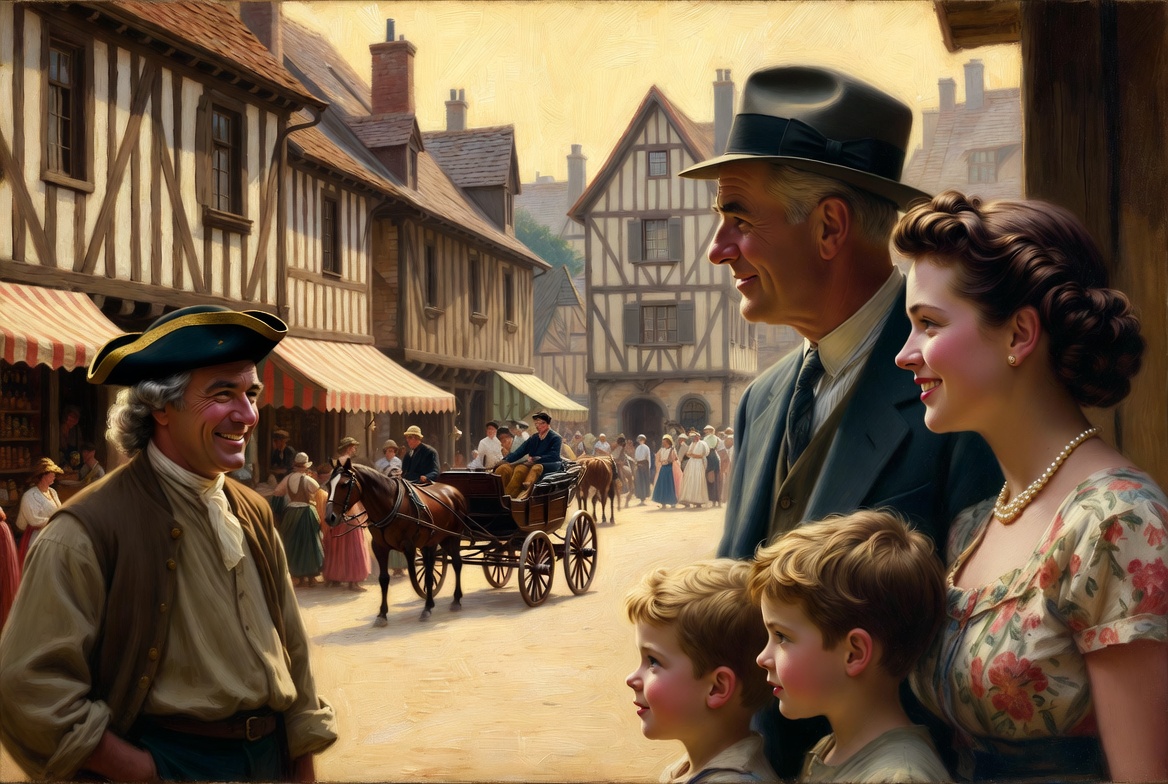
Yesterday, I had a long talk in the tavern with three people who are heavily invested in the spiritual, cultural and political revival of Southern California, and it encouraged me to paint, yet again, my vision of what a day on the farm might mean to a visiting family. If you are a regular guest, you might be thinking you know what that day means, but I think we could offer a lot more. Why? Well, first of all, there are large voids in our calendar, and second, what I’m trying to define, after my foggy fashion, is something I think our culture desperately needs.
What does our culture need? Meaning. Beauty. Elegance. Bravery. Laughter. Divine rest. Tranquility. I could go on, but you know what I mean — it’s all the cultural treasure that seems to be ignored, or ridiculed, by the creative class in the last sixty years. Our “natural man” is a kind of savage, and it’s easy to appeal to that savagery with raw sex and nihilistic violence, but it’s MUCH more difficult, as an artist, to point people towards heaven, to challenge and encourage them.
Why bring all this up in the context of adding a few 18th century craft shops, and perhaps a meeting house to the farm? My instincts tell me it is terribly important because there are some absolutely STUNNING living history sites across the country — military forts, period villages, gold rush towns. They certainly provide the beauty and the elegance and the weight of ancient shrines, but a lot of them are struggling because the story isn’t being told with passion, and, in some cases with actual disdain for the people who built the visual testimonials themselves. (The west really was “won,” folks. Only neurotic academic weirdoes, seeking tenure, think otherwise.)
Walt Disney certainly knew this when he designed a park that took you into old, main street America at the outset, but the beautiful old architecture wouldn’t have succeeded unless he also set out to make it “the happiest place on earth.” Think about the way the old Disney stories were told: heroes like Davy Crockett who “killed him a bar [bear] when he was only three,” or the Hayley Mills twins who conspired to make their parents fall back in love in “Parent Trap.” When you ponder how degenerate, and even sexually deviant modern Disney has become, you begin to see how huge a hole there is in the American heart, and the enormous market there might be for healing it. We need good stories.
It’s not enough, in other words, to walk into a colonial shop and watch a family engaged in the craft of making paper. The family needs to have a chronicle, some problems, and some surprising and heroic way of solving them. At the Revolutionary War Adventure, you are watching a story from beginning to end.
Right now, the farm is a pleasant place to hear a few of these stories; for most families, that means a visit once or twice a year, but the “spectacle” of the thing, and the farm’s current creature comforts, stop short of making it a place that becomes a “must stop” on any traveling family’s vacation agenda. By “spectacle,” I mean the inventory of visual impacts the average person sees at a place they NEED to visit: someone weaving a blanket, someone herding sheep, someone setting type in a print shop.
For the first round of farm improvements, bearing all of this in mind, I think we need..
- A manicured and landscaped trail system with the most politically incorrect (and redemptive) signage possible, along with shade structures.
- A tent, prop and craft tool investment, along with the storage infrastructure for setting up and taking down what would amount to “tent cities.” (If the concept works, the “tent cities” would progress to craft villages.)
- A shade structure dedicated to agricultural and living history education.
- A human investment in training and/or finding the kind of people who want to make “living history entertainment” their life’s work. We have some VERY talented people, but I would like to be able to pay them, and others more.
- County approval for 10-20 glam camp tents with heat, septic, and fire-suppression. If the concept works, these would progress to 3 or 4 star vacation cottages.
I think that’s a manageable first step, but it depends on a reliable answer to this question: “Would a family (vacationing or resident) pay an admission fee of $40 to $60 each to experience this?” By “this” I mean a kind of daily menu of activities and living history entertainment, supplemented by passive, unsupervised amenities (hiking trails, fruit-picking, people-watching, dining, etc.).
Also, by “this,” I mean a shamelessly patriotic, Christian, redemptive experience that leaves you with a lump in your throat on the way home.
Sound good? Would it work?
Tags: Development, Riley's Farm
Categorised in: Dominion, Farm Journal
This post was written by Jim Riley